
Manufacturers and products
Locate specified or approved manufacturers and relevant product references.
SpecSense helps low-voltage teams surface and organize project requirements from large specification packages, then review the findings against the source documents.
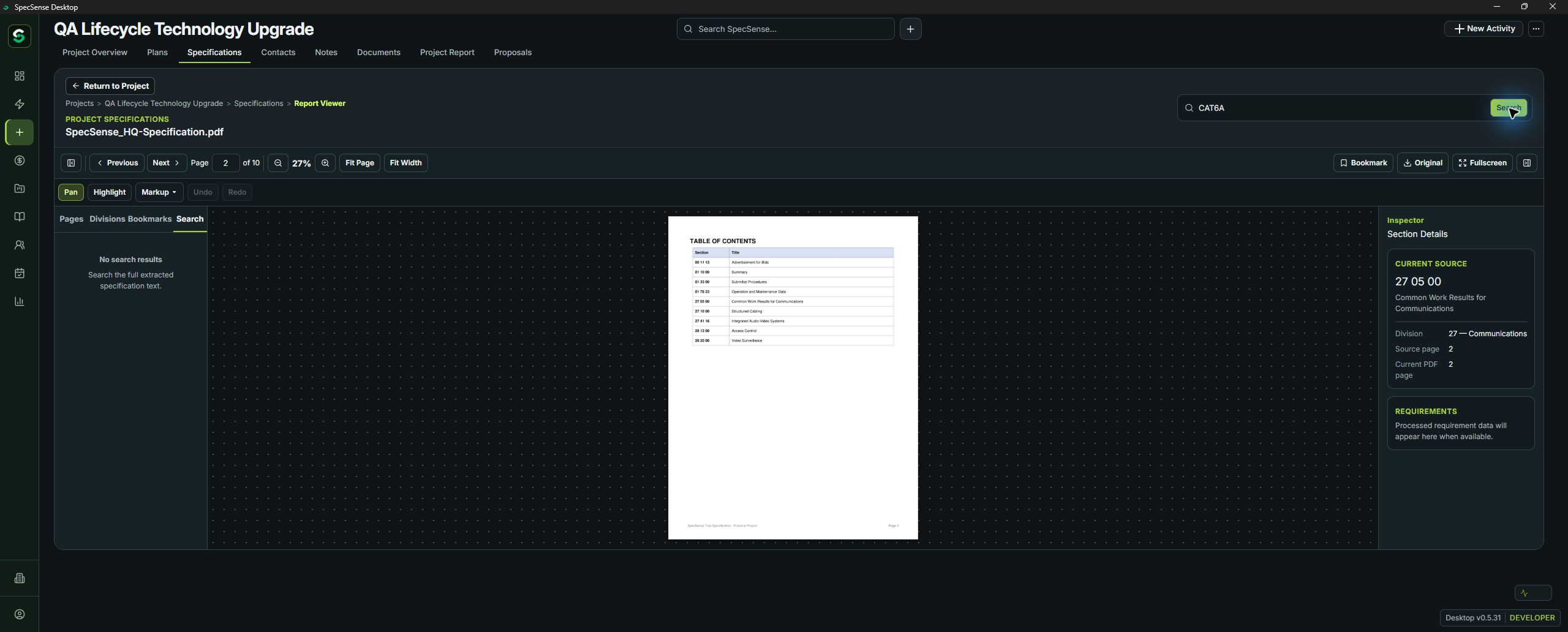
A specification package may span hundreds or thousands of pages. The requirements that matter to a low-voltage contractor can appear in technical sections, general conditions, closeout language, submittal procedures, schedules, and owner standards—not only in a single Division 27 or Division 28 section.
Manual review remains essential, but software can reduce the time spent locating and organizing likely requirements. SpecSense is designed to surface findings with source context so the team can review the original language instead of accepting an unsupported summary.
Locate specified or approved manufacturers and relevant product references.
Organize contractor, installer, training, and certification requirements for review.
Surface testing, commissioning, warranty, and service obligations that may affect scope.
Collect documentation, training, as-built, O&M, and closeout requirements.
Flag requirements for review without presenting the result as legal advice.
Keep page-aware evidence and review status close to each finding.
SpecSense analyzes supported specification PDFs through an explicit workflow. Results can include a structured summary, requirement categories, source references, risks, missing information, exceptions, and next actions.
Image-only or scanned documents may require OCR before reliable text analysis is possible. Unusual formatting, multi-column text, and project-specific language are additional reasons to review the original specification.
Specification analysis can help a team find and organize requirements more efficiently. It does not replace the contractor’s responsibility to read the bid documents, resolve conflicts, issue RFIs, or obtain legal and contractual advice when needed.
The practical goal is better preparation: know which items need attention, know where they came from, and decide what the estimating or operations team should do next.
SpecSense is being developed with estimators, designers, project managers, sales engineers, and contractors who work from real construction documents.
Join the Beta